

🎓 Certificate Included
Upon successful completion of this course, students will receive a digital Certificate of Completion that can be downloaded and shared as evidence of their learning achievement.


Your composition may be a little incorrect at times, but it may be adjusted by cropping the photograph. Some photographers intentionally shoot wider than necessary in order to have more flexibility when cropping the image later.
This was accomplished in the days of film by projecting the image onto photographic paper that was somewhat larger than the original. When working with digital images, it’s as simple as utilising the crop tool in your editing software. It’s usually a good idea to shoot a lot. Try to get the shot right the first time, but it’s not a bad idea to retake it a few times with tiny modifications each time.
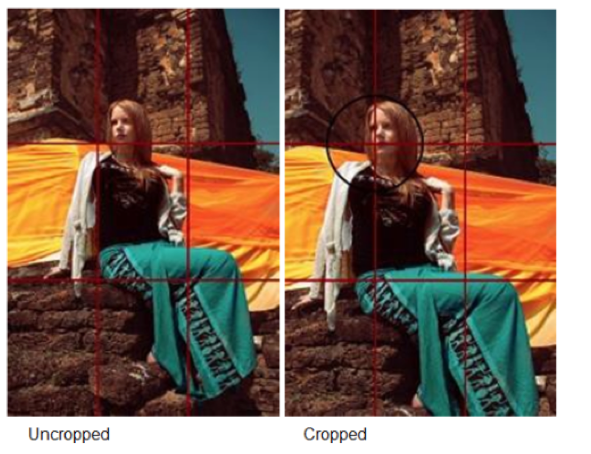
You may also use a Rule of Thirds grid with the crop tool to assist you choose the point of interest.
Dead space in your composition is something that happens from time to time. This is a place where there isn’t much to see. It’s not always a bad thing, since it can be used to purposefully isolate your subject. If your images have any dead space, try cutting it out to see if the composition improves.
The composition follows the Rule of Thirds and provides the point of interest by trimming the dead space in the left and bottom areas of the image. This isn’t always essential, and the Rule of Thirds should be disregarded on sometimes. If you’re unsure, make it simple. Avoid making the frame appear cluttered, as this will draw attention away from your composition’s focal point.
Symmetrical Composition
Different types of symmetry exist. Consider a line running through an image: everything on opposing sides of the line is a mirror image of the opposite side. Although this is more of a definition of perfect symmetry, it still holds true.
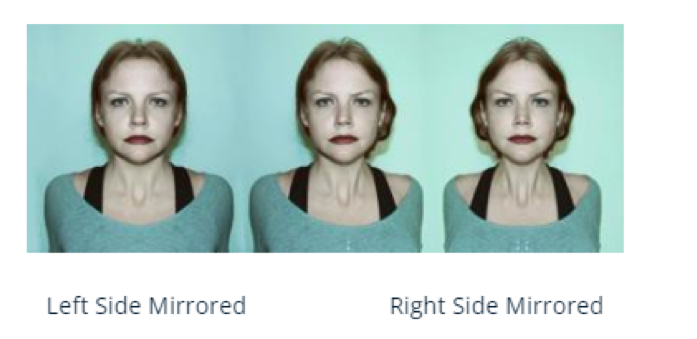
Draw a vertical line down the centre of a person’s face and duplicate each half; then make mirror images of each half and compare them.
So forget about exact symmetry; in most circumstances, it can only be achieved by Photoshop manipulation. In photography, symmetrical composition is more about balance – each side doesn’t have to be a mirror copy of the other, but they should at least appear similar.
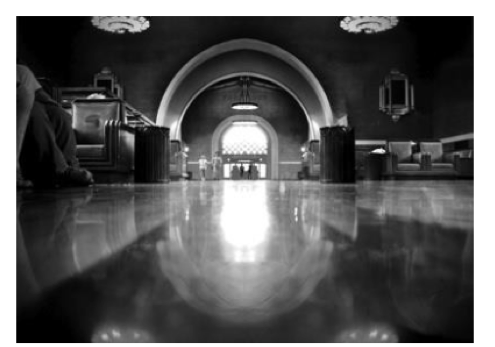
This image isn’t totally symmetrical, but it does have two types of symmetry: horizontal symmetry and vertical symmetry.
It’s occasionally a good idea to switch to live view mode here because it has more grid overlay possibilities. For symmetrical composition, these can be useful. A level indication is also included on newer DSLR cameras to ensure that the camera is not tilted.
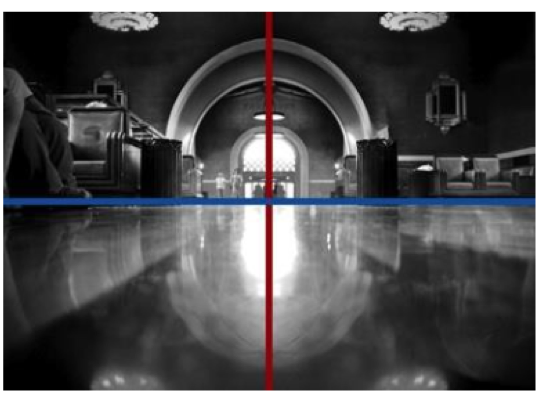
The vertical axis is represented by the red line; if we compare both sides, we can see that they are more or less symmetrical. The horizontal axis is represented by the blue line, and the reflected floor creates a symmetrical, albeit distorted, appearance.







 Google